
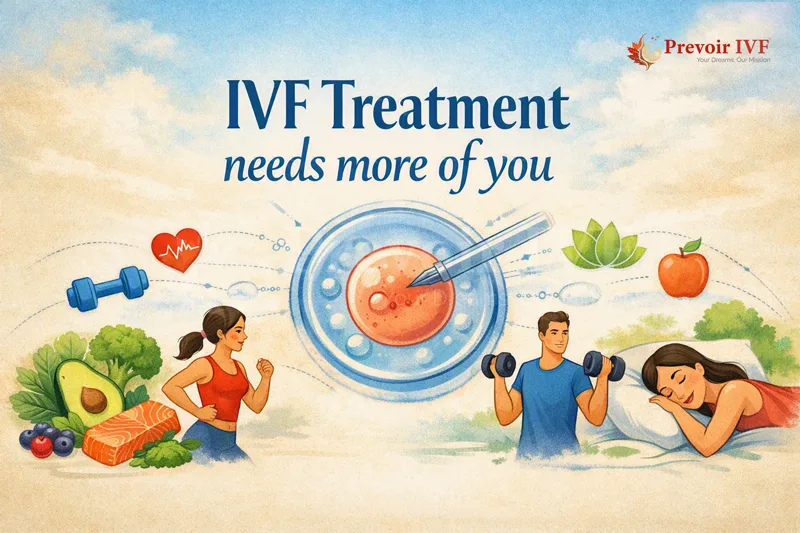
Our fertility specialist Dr. Neha Singh, Ulwe says How Personal Care, Fitness, and Lifestyle Choices Shape Fertility Success
IVF is not just a medical procedure — it’s a journey that requires your active participation. While advanced technology and expert doctors play a vital role, the success of IVF treatment often depends on how much you bring to the process: your health, your habits, and your mindset.
Personal Care: Nurturing Yourself
- 1
Sleep & Rest: Quality sleep supports overall health and helps maintain healthy hormonal function.
- 2
Stress Management: Practices such as meditation, journaling, or counseling can support emotional well-being during fertility treatment.
- 3
Hydration & Nutrition: Staying hydrated and eating balanced meals containing vegetables, fruits, lean proteins, whole grains, and other nutrient-rich foods supports overall health.
Fitness: Moving Towards Parenthood
- 1
Moderate Exercise: Activities such as walking, swimming, or gentle yoga can support physical well-being without excessive strain.
- 2
Weight Balance: Maintaining a healthy weight can support reproductive health and treatment outcomes.
- 3
Strength & Flexibility: Gentle strength training and stretching can help maintain physical fitness during the treatment journey.
Lifestyle & Habits: Small Changes, Big Impact
- 1
Quit Smoking & Limit Alcohol: Both can reduce fertility and affect embryo quality.
- 2
Mindful Eating: Incorporating fertility-friendly foods like leafy greens, nuts, seeds, and omega-3 rich fish supports reproductive health.
- 3
Digital Detox: Reducing screen time before bed improves sleep quality and mental well-being.
- 4
Positive Relationships: Surrounding yourself with supportive family and friends boosts emotional resilience.
The Human Element in IVF
IVF treatment needs more than science — it needs you. Your commitment to healthier habits, your emotional strength, and your lifestyle choices all contribute to making the journey smoother and more successful. Every step you take towards personal care is a step closer to parenthood.
IVF Success Rates in India (2026)
| Age Group | Live Birth Rate per Cycle | Notes |
|---|---|---|
| Under 33 | 45–58% | Highest success with own eggs |
| 33–35 | 40–52% | Still favorable outcomes |
| 35–37 | 30–42% | Decline begins |
| 38–40 | 22–32% | Moderate success |
| Above 40 | 10–18% | Significantly lower |
| Donor Egg (any age) | 52–65% | Consistently higher |
| Cumulative (3 cycles, under 35) | 78–87% | Strong long-term success |
Reference
https://www.fertilitynetwork.in/treatments/ivf/success-rates
Understanding the Benefits & Challenges of IVF
Advantages
- 1Higher Chance of Parenthood: IVF offers hope to couples experiencing infertility and provides an established treatment option for many fertility conditions.
- 2Advanced Technology: Techniques such as ICSI and appropriate embryo assessment can support treatment planning for selected patients.
- 3Cumulative Success: Multiple treatment cycles may increase the overall chance of achieving a successful outcome for some patients.
- 4Inclusivity: IVF may help patients with blocked tubes, low sperm count, PCOS, endometriosis, or unexplained infertility.
- 5Lifestyle Influence: Healthy nutrition, regular activity, adequate sleep, and stress management can support overall well-being.
Disadvantages
- 1Emotional Stress: The IVF process can be mentally and emotionally demanding and may require appropriate support.
- 2Physical Strain: Hormonal injections, egg retrieval, and other procedures may cause discomfort or temporary side effects.
- 3Cost Factor: IVF can involve significant costs, especially when additional procedures or multiple cycles are required.
- 4Success Rate Decline With Age: IVF outcomes generally decline with increasing maternal age, particularly as egg quantity and quality decrease.
- 5Lifestyle Adjustments: IVF may require changes to daily routines, medications, appointments, diet, and other lifestyle habits.
Reference
IVF can provide an important path toward parenthood, while also involving medical, emotional, and financial considerations.
Our Fertility specialist Dr. Sonali Mane says Embryo Quality is Critical in IVF
- 1
Implantation Potential: High-quality embryos (graded by systems like Gardner) have stronger inner cell masses and trophectoderm layers, which are essential for forming the fetus and placenta. Better embryo quality may be associated with a higher likelihood of successful implantation in the uterus.
- 2
Pregnancy Outcomes: Embryos with optimal morphology are more likely to develop into healthy pregnancies. Poor-quality embryos may fail to implant or may be associated with an increased risk of early miscarriage.
- 3
Efficiency of Treatment: Transferring high-quality embryos may reduce the number of IVF cycles needed for some patients, helping save time, emotional energy, and financial resources.
- 4
Cumulative Success Rates: Lower-graded embryos can still result in healthy pregnancies, while higher-graded embryos (e.g., a 4AA vs. a 3BC blastocyst) may contribute to better live birth potential.
- 5
Age & Lifestyle Connection: Embryo quality can decline with increasing maternal age, particularly after the mid-30s. Healthy nutrition, regular physical activity, and avoiding smoking/limiting alcohol support overall reproductive health.
More of You, More Hope
IVF treatment at Prevoir IVF is more than a medical journey — it is a partnership between science and self-care. While advanced technology and expert doctors provide the foundation, your personal commitment to fitness, nutrition, emotional well-being, and healthy lifestyle habits adds the crucial “more of you” that maximizes success. Ultimately, IVF treatment needs more of your resilience, your discipline, and your hope to transform possibility into parenthood.